31 Jul 2026 · Paper · Cell Reports
Thermodynamics of consciousness: non-equilibrium brain dynamics track conscious states
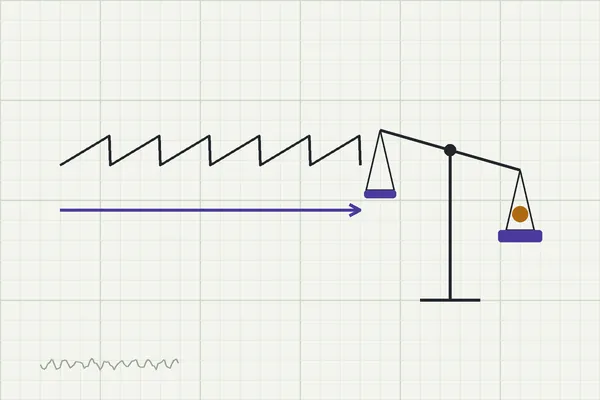
How far the brain sits from equilibrium tracked anaesthesia depth as well as the best-tested consciousness index.
A brain at rest is never in balance: activity has a direction in time. This team fitted computer models to recordings from people and mice and measured how far each brain was from balance. The distance shrank under anaesthesia and in unresponsive patients. In mice it followed anaesthesia depth slightly more closely than the stimulation-based index does.
Whole-brain generative models; fluctuation-dissipation theorem (FDT) violations from spontaneous activity. Mice under graded anaesthesia (LFP): PCI vs depth Spearman 0.71; FDT violations vs depth 0.885; FDT vs PCI 0.68. Lower FDT violations in unresponsive DoC and anaesthesia. Mouse data open on EBRAINS (10.25493/WKA8-Q4T). No spectral baseline.
What we do with it
We tested the scalp version of this idea (second-order irreversibility) on open sleep EEG and it did not replicate; our own time-asymmetry marker tracked arousal, not experience. The model-based estimator in this paper is still untested by us. Tested
Read the original. Source checked against the original.