News

New research on consciousness, summarised, with what we take from each

New papers and data, newest first. Every item opens at three levels of detail. Follow the feed (RSS). Every paper we have read is in the library.

Pictures are editorial illustrations drawn for this site, not data or brain images.

The field now: who is working on what

Roughly 6,300 researchers published journal papers on consciousness science in the past year, across these 11 directions.

Past 12 months, updated 19 November 2026. Bars show distinct authors; lines show papers per year (the dashed end is this year so far). These are estimates from keyword matches, not a census.

How we counted

Counts are estimates from keyword matches in OpenAlex titles and abstracts, journal articles and reviews only, for the 12 months to the update date. A paper can match more than one direction, and the headline removes people counted twice. Distinct authors and institutions are exact up to 400 papers per direction and extrapolated from the newest 400 above that. Each direction lists its exact query so anyone can check it.

  1. 1Clinical markers and disorders of consciousness

    Measure consciousness at the bedside: complexity indices (PCI), EEG and fMRI to find awareness in patients who cannot respond.

    ~3,100 authors · ~550 papers · ~1,000 institutions

    Papers per year: 2021: 380, 2022: 399, 2023: 426, 2024: 400, 2025: 501, 2026: 490 (2026 is the year so far)20212026

    rising+6% a year, 2021–2025

    Leading groupsOlivia Gosseries and Steven Laureys (University of Liège) · Brian Edlow and Yelena Bodien (Massachusetts General Hospital, Harvard) · Adrian Owen (Western University) · Jacobo Sitt (Paris Brain Institute, CNRS) · Mario Rosanova (University of Milan)

    NowCovert consciousness in patients who look unresponsive is the main push, with bedside EEG and fMRI, and early drug trials aimed at recovery. Read: Edlow et al. 2026, Monti et al. 2026, Edlow et al. 2026, Cóngyǔ et al. 2026.

    UsOur red-teamed benchmark re-scores published consciousness measures, PCI-style complexity included, with splits that cannot leak.

    Query

    ("disorders of consciousness" OR "perturbational complexity" OR "vegetative state" OR "minimally conscious state" OR "unresponsive wakefulness" OR "covert consciousness" OR "cognitive motor dissociation")

    Filter: type:article|review,primary_location.source.type:journal, published 2025-11-20 to 2026-11-19. Check the count on OpenAlex (the meta.count field).

  2. 2Anaesthesia

    Switch consciousness off and on with drugs and track what the brain loses and regains.

    ~980 authors · ~170 papers · ~400 institutions

    Papers per year: 2021: 140, 2022: 133, 2023: 144, 2024: 156, 2025: 192, 2026: 152 (2026 is the year so far)20212026

    rising+8% a year, 2021–2025

    Leading groupsEmery Brown (Massachusetts General Hospital and MIT) · Earl Miller (MIT) · George Mashour and Zirui Huang (University of Michigan) · Andrea Luppi and Emmanuel Stamatakis (University of Cambridge) · Ken Solt (Harvard University)

    NowGroups map which circuits (thalamus, basal ganglia) switch off under each drug and whether the brain loses integration or only responsiveness. Read: Szocs et al. 2026, Milinkovic et al. 2026, Li et al. 2026.

    UsOur time-irreversibility tests on anaesthesia and sleep data found the markers follow arousal, not experience.

    Query

    (anesthesia OR anaesthesia OR propofol OR sevoflurane OR ketamine) AND (consciousness OR unconsciousness) AND (EEG OR cortical OR brain)

    Filter: type:article|review,primary_location.source.type:journal, published 2025-11-20 to 2026-11-19. Check the count on OpenAlex (the meta.count field).

  3. 3Sleep and dreaming

    Sleep changes experience while the body stays still, so dreaming against dreamless sleep is a natural contrast.

    ~780 authors · ~170 papers · ~320 institutions

    Papers per year: 2021: 131, 2022: 128, 2023: 141, 2024: 137, 2025: 162, 2026: 151 (2026 is the year so far)20212026

    rising+5% a year, 2021–2025

    Leading groupsKen A. Paller (Northwestern University) · Martin Dresler (Radboud University) · Francesca Siclari (Netherlands Institute for Neuroscience) · Isabelle Arnulf (Sorbonne Université) · Péter Simor (Eötvös Loránd University)

    NowSerial-awakening studies with high-density EEG, and real-time reports from dreamers, are mapping what changes in the brain when sleepers report an experience. Read: Selte et al. 2026, Konkoly et al. 2026, Rochas et al. 2026.

    UsOur experience benchmark uses the open DREAM database to test whether published measures can tell dreaming from dreamless sleep.

    Query

    (dream OR dreaming OR dreams OR "lucid dreaming" OR "sleep mentation" OR "serial awakening") AND sleep AND (EEG OR consciousness OR REM OR NREM OR awakening OR awakenings)

    Filter: type:article|review,primary_location.source.type:journal, published 2025-11-20 to 2026-11-19. Check the count on OpenAlex (the meta.count field).

  4. 4Psychedelics

    Drugs that change experience a lot without sedation show which brain changes track experience itself.

    ~610 authors · ~160 papers · ~290 institutions

    Papers per year: 2021: 65, 2022: 87, 2023: 114, 2024: 122, 2025: 154, 2026: 134 (2026 is the year so far)20212026

    rising+23% a year, 2021–2025

    Leading groupsRobin Carhart-Harris (University of California, San Francisco) · Christopher Timmermann and David Nutt (Imperial College London) · Morten Kringelbach (Aarhus University) · Matthias Liechti (University of Basel) · Katrin Preller (University of Zurich)

    NowStudies link brain changes under psilocybin to how intense the experience is, and test the 'entropic brain' idea against simpler spectral effects. Read: Carhart-Harris 2026, Nikolič et al. 2026, Dai et al. 2026.

    UsOpen psilocybin EEG is one of the contrasts we use to separate experience from arousal.

    Query

    (psychedelic OR psychedelics OR psilocybin OR LSD OR DMT OR "5-MeO-DMT") AND (consciousness OR "altered states")

    Filter: type:article|review,primary_location.source.type:journal, published 2025-11-20 to 2026-11-19. Check the count on OpenAlex (the meta.count field).

  5. 5Perception and recurrent processing

    Find what changes in the brain when the same stimulus is seen or missed; recurrent processing theory says local feedback in sensory cortex is enough.

    ~500 authors · ~120 papers · ~320 institutions

    Papers per year: 2021: 113, 2022: 96, 2023: 77, 2024: 98, 2025: 116, 2026: 113 (2026 is the year so far)20212026

    steady+1% a year, 2021–2025

    Leading groupsBiyu J. He (New York University) · Lucia Melloni (Max Planck Institute for Empirical Aesthetics) · Simon van Gaal (University of Amsterdam) · Paolo Bartolomeo (Paris Brain Institute) · Lionel Naccache (Sorbonne Université)

    NowNo-report designs and long-timescale dynamics are separating the brain activity that tracks awareness from the activity that tracks reporting it. Some argue that there are several kinds of correlate. Read: Zheng et al. 2026, Sergent et al. 2021, Kob et al. 2026.

    UsOur census of open data with reports counts which awareness datasets can be reused, and with what kind of report.

    Query

    ("recurrent processing" OR "neural correlates of consciousness" OR "conscious perception" OR "visual awareness" OR "conscious access" OR "perceptual awareness" OR "conscious report") AND (consciousness OR conscious OR awareness) AND (brain OR neural OR cortex OR cortical OR EEG OR MEG OR fMRI)

    Filter: type:article|review,primary_location.source.type:journal, published 2025-11-20 to 2026-11-19. Check the count on OpenAlex (the meta.count field).

  6. 6Consciousness in AI

    Ask whether machines could be conscious by checking them against the indicators that theories name.

    ~420 authors · ~220 papers · ~270 institutions

    Papers per year: 2021: 29, 2022: 35, 2023: 38, 2024: 87, 2025: 149, 2026: 184 (2026 is the year so far)20212026

    rising+52% a year, 2021–2025

    Leading groupsJaan Aru (University of Tartu) · Stephen M. Fleming (University College London) · Michele Farisco (Uppsala University) · Michael S. A. Graziano (Princeton University) · Jonathan Birch (London School of Economics)

    NowGroups are drawing indicator checklists from brain theories and testing whether language models build workspace-like representations. This is the fastest-growing direction here. Read: Butlin et al. 2026, Chandaria et al. 2026, Gurnee et al. 2026.

    Query

    "artificial consciousness" OR "machine consciousness" OR "AI consciousness" OR "conscious AI" OR "conscious machines" OR "AI sentience" OR "consciousness in large language models" OR "consciousness in artificial"

    Filter: type:article|review,primary_location.source.type:journal, published 2025-11-20 to 2026-11-19. Check the count on OpenAlex (the meta.count field).

  7. 7Predictive processing and active inference

    Experience is the brain's best guess about the causes of its inputs, including the body.

    ~220 authors · ~100 papers · ~160 institutions

    Papers per year: 2021: 21, 2022: 17, 2023: 21, 2024: 31, 2025: 52, 2026: 85 (2026 is the year so far)20212026

    rising+27% a year, 2021–2025

    Leading groupsKarl Friston (University College London) · Jakob Hohwy (Monash University) · Cyriel Pennartz (University of Amsterdam) · Ruben Laukkonen (Southern Cross University) · Antoine Lutz (Université Lyon 1)

    NowActive-inference accounts are being turned into concrete predictions, including links to meditation and an adversarial test against IIT. Read: Da Costa et al. 2026, Corcoran et al. 2026, Tanabe 2026.

    Query

    ("predictive processing" OR "predictive coding" OR "active inference" OR "free energy principle") AND consciousness

    Filter: type:article|review,primary_location.source.type:journal, published 2025-11-20 to 2026-11-19. Check the count on OpenAlex (the meta.count field).

  8. 8Integrated information theory

    Consciousness is how much a system's causal structure is integrated, measured as phi.

    ~180 authors · ~70 papers · ~100 institutions

    Papers per year: 2021: 37, 2022: 51, 2023: 26, 2024: 50, 2025: 56, 2026: 60 (2026 is the year so far)20212026

    rising+8% a year, 2021–2025

    Leading groupsGiulio Tononi (University of Wisconsin–Madison) · Larissa Albantakis (University of Wisconsin–Madison) · Mélanie Boly (University of Wisconsin–Madison) · Naotsugu Tsuchiya (Monash University) · Christof Koch (Allen Institute)

    NowAfter a public dispute over whether IIT is testable, the work is on formal limits of phi, testable predictions such as 'silent neurons', and a new adversarial test against predictive processing. Read: IIT-Concerned et al. 2025, Ponce de Leon et al. 2026, Mayeux 2026, Corcoran et al. 2026.

    UsOur phi-proxy study checks whether the cheap stand-ins for phi used on real data track true phi.

    Query

    ("integrated information" OR "integrated information theory") AND consciousness

    Filter: type:article|review,primary_location.source.type:journal, published 2025-11-20 to 2026-11-19. Check the count on OpenAlex (the meta.count field).

  9. 9Higher-order and metacognitive theories

    A state is conscious when the brain represents itself as being in it, so confidence and metacognition are the signal.

    ~140 authors · ~50 papers · ~80 institutions

    Papers per year: 2021: 31, 2022: 34, 2023: 22, 2024: 29, 2025: 42, 2026: 40 (2026 is the year so far)20212026

    steady+5% a year, 2021–2025

    Leading groupsStephen M. Fleming (University College London) · Hakwan Lau (RIKEN Center for Brain Science) · David Soto (Basque Center on Cognition, Brain and Language) · Matthias Michel (MIT) · Myrto Mylopoulos (Carleton University)

    NowThe work centres on metacognition: whether confidence and prefrontal cortex are needed for awareness, building on relative-blindsight tasks. Read: Lau et al. 2006, Del et al. 2009.

    UsOur theory scorecard maps where this view and its rivals predict different results.

    Query

    ("higher-order theory" OR "higher-order theories" OR "higher-order thought" OR "higher-order representation" OR "perceptual reality monitoring" OR ((metacognition OR metacognitive) AND (perception OR perceptual OR confidence OR visual))) AND consciousness

    Filter: type:article|review,primary_location.source.type:journal, published 2025-11-20 to 2026-11-19. Check the count on OpenAlex (the meta.count field).

  10. 10Global workspace

    Consciousness is information broadcast across the whole brain, with a sudden 'ignition' when something becomes conscious.

    ~120 authors · ~50 papers · ~60 institutions

    Papers per year: 2021: 23, 2022: 27, 2023: 23, 2024: 29, 2025: 37, 2026: 47 (2026 is the year so far)20212026

    rising+11% a year, 2021–2025

    Leading groupsStanislas Dehaene (Inserm, NeuroSpin) · Jean-Pierre Changeux (Institut Pasteur) · Lionel Naccache (Sorbonne Université) · Emmanuel Stamatakis (University of Cambridge) · Theofanis Panagiotaropoulos (National and Kapodistrian University of Athens)

    NowThe first adversarial test against IIT (Cogitate, 2025) failed some predictions of both theories; groups are reanalysing that data and asking whether language models build a workspace. Read: Cogitate Consortium 2025, Bandara et al. 2026, Gurnee et al. 2026.

    UsOur sealed multiverse reanalysis of the Cogitate data tests the workspace and IIT predictions again.

    Query

    ("global workspace" OR "global neuronal workspace") AND consciousness

    Filter: type:article|review,primary_location.source.type:journal, published 2025-11-20 to 2026-11-19. Check the count on OpenAlex (the meta.count field).

  11. 11Adversarial collaborations

    Rival theories agree on a decisive experiment before the data are in.

    ~50 authors · ~9 papers · ~30 institutions

    Papers per year: 2021: 0, 2022: 2, 2023: 4, 2024: 3, 2025: 8, 2026: 8 (2026 is the year so far)20212026

    rising+47% a year, 2021–2025

    Leading groupsLucía Melloni (Max Planck Institute for Empirical Aesthetics) · Liad Mudrik (Tel Aviv University) · Giulio Tononi (University of Wisconsin–Madison) · Cyriel Pennartz (University of Amsterdam) · Karl Friston (University College London)

    NowCogitate (workspace against IIT) has reported; INTREPID (IIT against predictive processing) is under way, and people are debating how to score theories fairly. Read: Cogitate Consortium 2025, Corcoran et al. 2026, Chis-Ciure 2026.

    UsWe run sealed, pre-registered reanalyses of the open Cogitate data in the same spirit.

    Query

    "adversarial collaboration" AND consciousness

    Filter: type:article|review,primary_location.source.type:journal, published 2025-11-20 to 2026-11-19. Check the count on OpenAlex (the meta.count field).

Get the important new papers by email

Every couple of weeks: only the papers that matter for Open Mind, in plain words, and what we did with them. No spam; unsubscribe in one click.

01Latest

New sleep studies say EEG can tell a dream from no dream; we test whether that holds in new labs

· Paper · Neuroscience of Consciousness

Integrated information in small groups of rodent neurons falls in deep sleep, but part of the fall tracks firing rate (Onoda)

Phi from integrated information theory, computed on four-part systems built from rodent spikes, dropped in NREM sleep; in visual cortex the drop went away once firing rates were matched.

What we do with it: Our Phi proxy test (task #9) already logs mean activity beside true Phi. This paper is the reason to report every proxy, and Phi itself, both raw and after firing-rate matching, and to flag any wake-sleep difference that rate matching removes. In the constraint ledger it counts as weak support for IIT's sleep prediction, with the rate and timescale caveats attached. Planned
· Preprint · bioRxiv

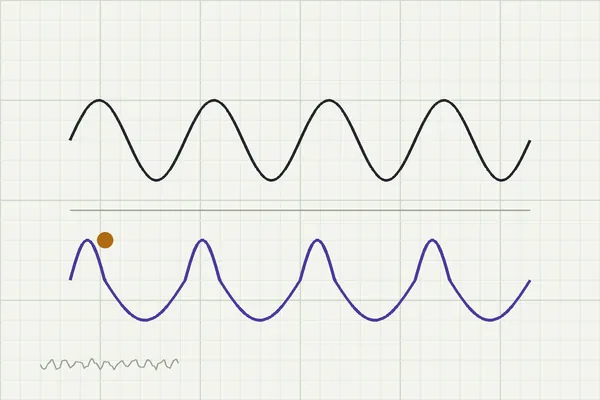
Waveform morphology links local circuit kinetics to cortical interactions

The shape of a brain wave, not only its size, can make it look 'irreversible' in time.

What we do with it: A likely reason for our own result: our waveform-asymmetry marker separated wake from deep sleep but not dreaming from deep sleep. If asymmetry reflects synaptic kinetics, it should follow arousal, which is what we saw. Tested

· Paper · Cortex

Alpha rhythm that stays in step across the back of the brain tracks cognitive recovery after severe brain injury

A network measure of alpha coherence picked out patients who regained higher cognition better than a standard connectivity measure.

What we do with it: Coherence is built from the cross-spectrum, and our multichannel phase-randomised surrogates keep the cross-spectrum. So in the surrogate gate (task #8) this measure counts as spectral by design. The open question for us is whether alpha network shape adds anything over alpha power; we will test that on the Chennu propofol EEG (task #21) under a sealed prereg. Planned
· Preprint · PsyArXiv (v4)

Neural correlates of dreaming during N2 sleep: spatial and phenomenological characteristics

In light sleep, faster brain activity at the back of the head came before awakenings with a dream.

What we do with it: Our experience benchmark uses the same stage (N2) and the last 20 s. A high-frequency effect like this one is what our frozen spectral baseline should already capture, so the question we ask is whether any other marker adds to it in labs it has never seen. Planned
· Paper · PLoS Computational Biology

Individualised electrophysiological neural field models for the assessment of thalamocortical function in disorders of consciousness

A brain model fitted only to EEG power reproduced the complexity scores that separate patients.

What we do with it: Support for our main caution: if a model fitted to the spectrum reproduces a complexity score, that score adds little beyond the spectrum. We will check whether the shared replication data include per-patient spectra. Planned

· Preprint · bioRxiv

Inferring brain structural complexity from dynamical measures

In simulated brains, pulse-based complexity tracked the wiring; measures of resting activity did not agree with each other.

What we do with it: A model-based reason the resting-EEG markers in our benchmark may fail. It also suggests a positive control we could add later: plant known wiring in a simulation and check each marker can see it. Planned

· Paper · Neuron

Have grand theories of consciousness earned their keep?

Two senior researchers argue that careful experiments, not big theories, produced the field's real advances.

What we do with it: Matches how we work: a measure has to earn its place on held-out data before any theory is credited. Our main study is a benchmark, not a theory test, for this reason. Planned

· Preprint · bioRxiv

Neural signatures of conscious experience during sleep: a serial awakening study using high-density EEG

A large sleep study reports that one minute of EEG can tell a dream from no dream about 80% of the time.

What we do with it: This is the strongest claim yet that our main study could come out the other way. Our benchmark holds stage fixed, tests in labs never used for training, and asks what each marker adds over the spectrum. We will report the spectral baseline's own score as a headline number, so a strong spectral result is visible, not hidden. Planned

· Paper · Nature

Psychedelics align brain activity with context

Psilocybin made brain activity follow what people were doing more closely, and the data are open.

What we do with it: Open EEG from a state where experience grows while arousal does not fall. That is the contrast our state benchmark lacks: a marker that rises here and falls under propofol is tracking more than wakefulness. Planned

· Preprint · PsyArXiv

Systematic theory-method dependencies in consciousness research

Across 518 experiments, the method a study used predicted which theory it ended up supporting.

What we do with it: Our theory scorecard will note which method each piece of evidence came from, so a theory is not credited just because its supporters favour one kind of experiment. Planned

· Paper · Cell Reports

Thermodynamics of consciousness: non-equilibrium brain dynamics track conscious states

How far the brain sits from equilibrium tracked anaesthesia depth as well as the best-tested consciousness index.

What we do with it: We tested the scalp version of this idea (second-order irreversibility) on open sleep EEG and it did not replicate; our own time-asymmetry marker tracked arousal, not experience. The model-based estimator in this paper is still untested by us. Tested

· Preprint · arXiv

Verbalizable representations form a global workspace in language models

Inside language models, the content a model can put into words behaves like a 'global workspace'.

What we do with it: A concrete, checkable workspace signature in AI. It fits the access side of the workspace theory and says nothing about experience; we would list it as an indicator, not evidence of consciousness. Planned

· Paper · Neuroscience of Consciousness 2026(1), niag029

A data-driven approach to identifying and evaluating connectivity-based neural correlates of conscious visual perception

Testing 246 ways of measuring brain connectivity on the COGITATE data gives tentative support to the workspace theory.

What we do with it: A second independent reanalysis of the same data, from a different angle. Its 246-measure sweep is a template for our pre-registered multiverse; we would hash the measure list first. Planned

· Paper · Trends in Cognitive Sciences 30(6), 488-501

Identifying indicators of consciousness in AI systems

A method for judging whether an AI could be conscious by checking its inner workings against what theories of consciousness require, not by what it says.

What we do with it: The rubric for our AI stress tests: we use it to find where theories disagree or give absurd answers, never as a verdict on AI and never scoring an AI's self-report. Planned

· Paper · Neuroscience & Biobehavioral Reviews 187, 106742

Integrated information and predictive processing theories of consciousness: an adversarial collaborative review (INTREPID)

The second big adversarial collaboration has published its plan: IIT against two predictive-brain theories. No results yet.

What we do with it: If its data appears after we seal our predictions, it is a clean prospective test. Its evidence-pooling idea is a model for our own log-score comparison of theories. Planned

· Paper · Translational Psychiatry 16, 160

Electrophysiological effects of psilocybin co-administered with midazolam

With a sedative given alongside psilocybin, brain-signal complexity still rose as the psychedelic effects came on.

What we do with it: A case where complexity and the spectral exponent move together under a drug that changes experience. Our test asks whether complexity adds anything once the exponent is known. Planned

· Paper · Nature Human Behaviour 10, 777-802

Convergent transcriptomic and connectomic controllers of information integration and its anaesthetic breakdown across mammalian brains

Across humans, monkeys, marmosets and mice, anaesthetics break down the brain's integration of information, and waking a monkey with deep-brain stimulation brings it back.

What we do with it: Shows that whether a Phi-like proxy rises or falls under anaesthesia depends on the modality and the estimator. Our known-Phi network test (task #9) must check each proxy before we trust its direction. Planned

· Paper + dataset · Scientific Reports (data: OpenNeuro ds005620)

A repeated awakening study exploring the capacity of complexity measures to capture dreaming during propofol sedation

Brain complexity dropped under sedation, but did not differ between people who said they had been dreaming and people who said they had not.

What we do with it: One of our L2 datasets. The full set is far over our 1.5 GB budget; we fetch only the pre-awakening sedation files per subject. The 5 no-experience awakenings make it weak alone for dream vs no-dream; pool with DREAM. Planned

· Paper · Cerebral Cortex 35(9), bhaf254

The role of etiology in the identification of clinical markers of consciousness: comparing EEG alpha power, complexity, and spectral exponent

In 303 unresponsive patients, a popular complexity measure mostly repeated what the slope of the EEG spectrum already showed; once corrected for that, its diagnostic value vanished.

What we do with it: The direct source for our surrogate gate (task #8) and the LZ vs slope test (task #4). It is the PMC12448740 paper the plan cites. We also stratify by aetiology wherever patient data allow. Planned

· Dataset · Nature Communications 16, 7495

A dream EEG and mentation database (DREAM)

Twenty sleep studies pooled their brain recordings with what people said they were dreaming when woken up: 505 people, 2,643 awakenings.

What we do with it: The key resource for our dream vs no-dream test (task #6). Their AUCs are the bar to beat, but we split by subject and lab, so our numbers may come out lower. Planned

· Paper · Nature 642, 133-142

Adversarial testing of global neuronal workspace and integrated information theories of consciousness

The first big head-to-head test of two theories of consciousness found that each got some predictions right and each got key claims wrong.

What we do with it: The data is public (Experiment 1: MEG, fMRI, iEEG), so it is the first place we test whether the published conclusions survive other reasonable analyses. Note the paper's iEEG n is 34; the plan said 38. Planned

02Landmarks

The landmark papers made a magnetic pulse the best-validated test so far

Older papers that set the terms of the question.

· Paper · Communications Biology 7, 946

Critical dynamics in spontaneous EEG predict anesthetic-induced loss of consciousness and perturbational complexity

In 15 healthy adults under three anaesthetics, resting EEG predicted the stimulation-based consciousness index closely.

What we do with it: If true, the best-validated measure could be tested on many more open datasets. Caution: 15 subjects, 5 per drug, and the same cohort as Colombo 2019 and Sarasso 2015, so these are not independent replications. We test it out of sample. Planned

· Letter · PsyArXiv (open letter); follow-up in Nature Neuroscience 28, 689-693 (2025)

The integrated information theory of consciousness as pseudoscience

A group of researchers called IIT pseudoscience, which set off a public dispute over what counts as a test of a theory of consciousness.

What we do with it: It is why we judge every theory only by predictions sealed in advance. Planned

· Paper · Nature Neuroscience 20, 872-878

The neural correlates of dreaming

Less slow activity at the back of the brain marked dreaming in both kinds of sleep, and could predict a dream report in real time.

What we do with it: The sharpest within-stage test of a measure against report. The DREAM database (2025) lets us test whether it replicates across labs. Planned

· Paper · Annals of Neurology 80, 718-729

Stratification of unresponsive patients by an independently validated index of brain complexity

A cutoff on the stimulation-based complexity index, set in people who could report, separated conscious from unconscious perfectly and flagged some 'vegetative' patients as possibly conscious.

What we do with it: The strongest published L2 result. No open TMS-EEG set of this kind exists, which is the biggest data gap in our plan. Planned

· Paper · Current Biology 25, 3099-3105

Consciousness and complexity during unresponsiveness induced by propofol, xenon, and ketamine

Under ketamine, people stopped responding but their brain's response to a magnetic pulse stayed wake-like, and afterwards they reported vivid dreams.

What we do with it: Defines our ketamine dissociation case. The same group's data underlies Colombo 2019 and Maschke 2024, so we need an independent ketamine dataset. Planned