16 Nov 2026 · Preprint · bioRxiv
Waveform morphology links local circuit kinetics to cortical interactions
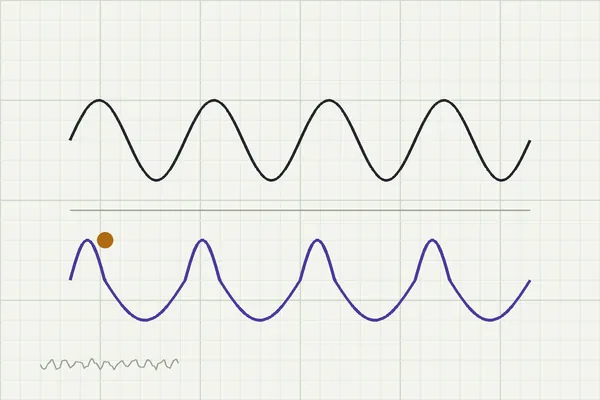
The shape of a brain wave, not only its size, can make it look 'irreversible' in time.
Brain waves are not perfect sine waves; their rise and fall can differ. This team showed in a model, in recordings from inside the brains of 23 patients and in monkeys, that this lopsidedness comes from how fast local synapses switch on and off. That lopsidedness was what most strongly drove a common measure of time-irreversibility.
Modified Wilson-Cowan model; sEEG in 23 patients; macaque ECoG. Waveform asymmetry was most strongly associated with local irreversibility; alpha frequency related more to inter-regional measures. Phase-locked perturbations changed imaginary coherency and irreversibility with coupling fixed. Macaque ECoG reproduced the frequency links but not the waveform link. Not peer reviewed. (abstract only)
What we do with it
A likely reason for our own result: our waveform-asymmetry marker separated wake from deep sleep but not dreaming from deep sleep. If asymmetry reflects synaptic kinetics, it should follow arousal, which is what we saw. Tested
Read the original. Source checked against the original.