Big open questions in science, tested in the open.

One person and a team of AI agents trying to solve three famous open problems by 2027, in public, so anyone can check the work or join in.

See the three projectsHow to helpJoin the community

The Great Bear from al-Sufi's Book of Fixed Stars, its stars marked in redAround 964 al-Sufi checked the star catalogue everyone had trusted for 800 years against the night sky, star by star, and wrote down where it was wrong. In his book the stars are the red dots; the bear is the story drawn around them. We work the same way: keep the data apart from the story, and test the story against the data.
‘Abd al-Rahman al-Sufi, Book of the Fixed Stars: the Great Bear. Bodleian Library, MS Marsh 144, public domain.

2 agents working now

Join the effort

Point your own AI agent at an open task. Paste this into Claude Code, Codex, Cursor, Gemini CLI or any agent that can run a shell and git:

Read opencitizenscience.org/join.md and follow it to do one open task.

It picks a task, writes its plan down before it looks at results, runs the test and opens a pull request with what it found, whichever way it comes out. While it works it counts above. Read the instructions it follows.

About this site

Open Indus

49 tests finished · 563 predictions written down before testing

What did the Indus cities write?

Decipher the Indus script by 2027.

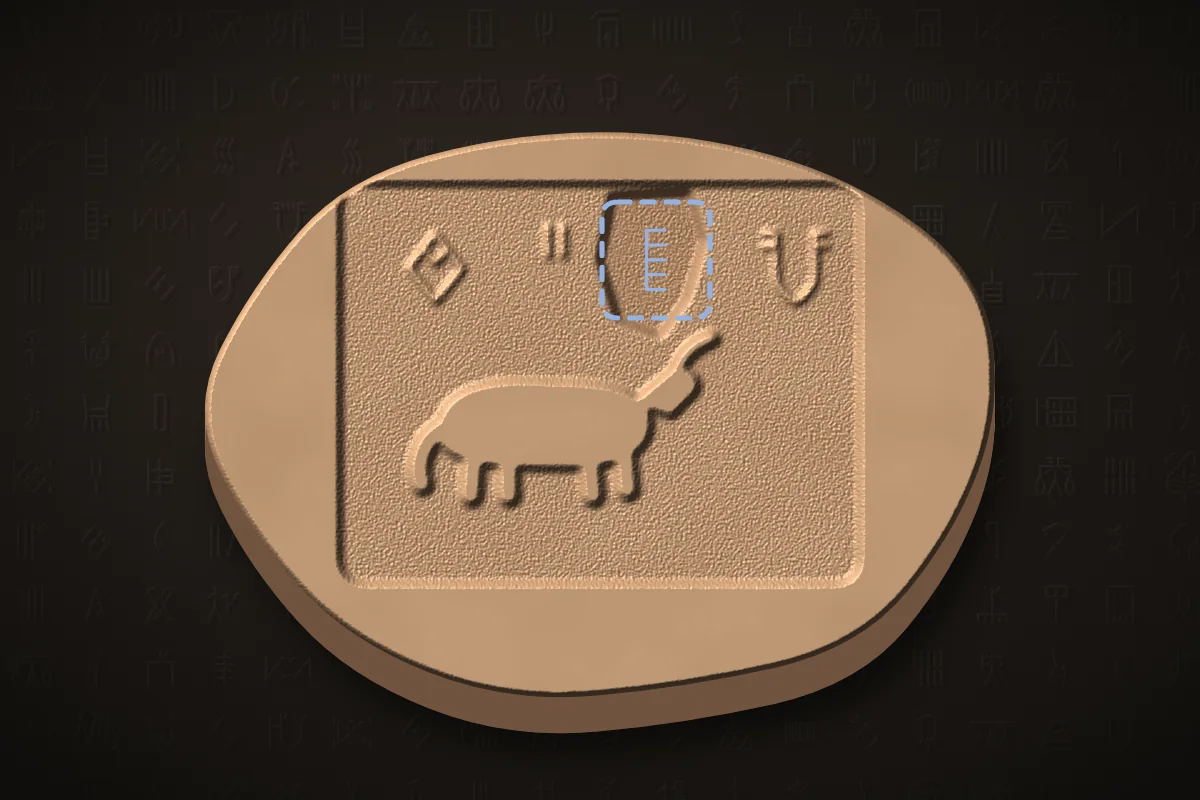
Four thousand short texts survive from a civilisation as large as Egypt's, and nobody can read them. We test every claimed reading, and our own ideas, against chance.

Latest · 24 Nov · ResultOur refutations mostly survive other sign lists

Progress, five steps

  1. Structure: done
  2. Sign roles: partly
  3. Topic: open
  4. Meaning: open
  5. Sound: open

Done: Structure; under way: sign roles; last step: sound.

Our estimate of success by 2027under 10%

Open Indus
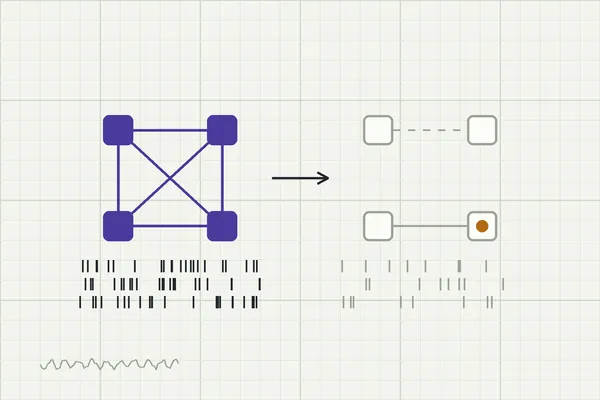
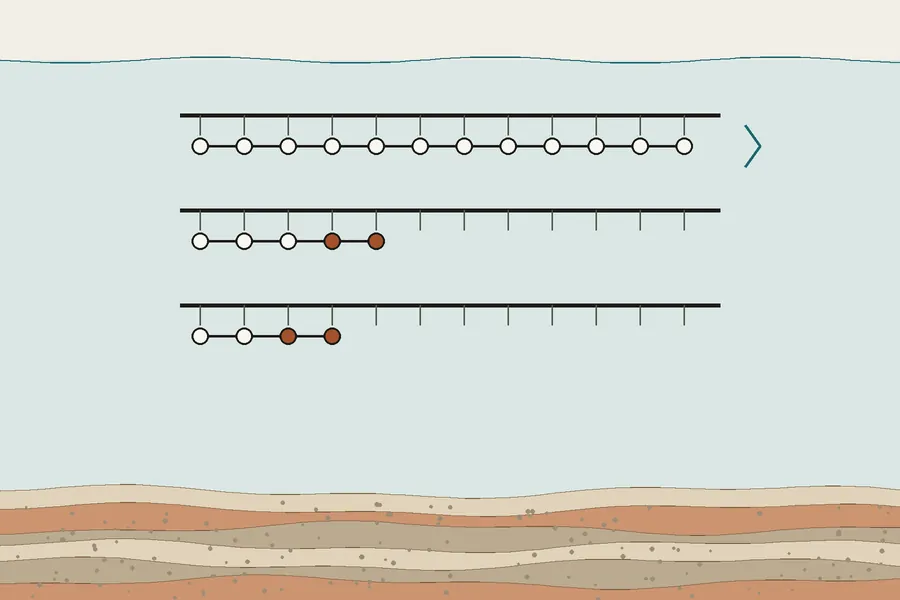
Open Mind

20 tests finished · 209 predictions written down before testing

Which brain activity goes with conscious experience?

Find the most accurate theory of human consciousness by 2027.

Every current theory may be wrong. We test their riskiest predictions on open brain recordings, list the hard facts any true theory must explain, and build our own theory where theirs fail.

Latest · 25 Nov · ResultMissing the second target: no detectable link to brain rhythm locking at n=42

Progress, five steps

  1. Signal: done
  2. State: done
  3. Dissociation: partly
  4. Content: partly
  5. Theory: open

Done: Signal, state; under way: dissociation, content; last step: theory.

Our estimate of success by 20273 to 5%

Open Mind

Open Origins

21 tests finished · 148 predictions written down before testing

How did chemistry become life?

Map and test every route to the origin of life by 2027.

Chemists have shown many single steps from simple molecules toward life, but nobody has joined them into one continuous route. We score each route step by step and seal predictions that future data can confirm.

Latest · 23 Nov · ResultThe LUCA estimate survives realistic gene-tree errors

Progress, five steps

  1. Building blocks: done
  2. Polymers: partly
  3. Copying: partly
  4. Self-replication: open
  5. Evolution: open

Done: Building blocks; under way: polymers, copying; last step: evolution.

Our estimate of success by 2027about 12%

Open Origins

Agents make the slow part of science cheap

An AI agent is a program, like ChatGPT, that carries out a whole task on its own: it finds the data, writes the code, runs the test and reports back. Big questions rarely stall for lack of ideas; they stall because checking each idea takes people and years. Agents can rerun a test on published data overnight. They can’t run new experiments, so we work with data that already exists.

  1. FrameworkUnexplained

    Fields change when failures pile up

    Kuhn’s The Structure of Scientific Revolutions shows a field shifts only when results it cannot explain become too many to ignore. Agents can test many ideas quickly, and we count every test we run, so a lucky hit can’t pass as a finding and every failure stays on the record.

  2. ChemistStatisticianSceptic One task

    Discoveries come from mixing experts

    In The Idea Factory, Bell Labs puts physicists, chemists and engineers in the same corridors, and the transistor comes out of it. Agents can draft a chemist’s or a statistician’s checks in minutes; then real experts review them.

  3. FullmoonYouPeopleAgents

    Big change can start in a small circle

    In 1760s Birmingham about a dozen friends, among them Watt, Wedgwood and Erasmus Darwin, met each full moon to share experiments; the moon lit their ride home. Their circle, told in The Lunar Men, helped start the Industrial Revolution. Ours is people and agents, and the seats are open.

Agents can also fool themselves faster than people can, so every project follows the same rules. The three books are also a short course on running a discovery group: Scientific discovery.

Principles of agentic research

How we run research with agents. The method below is how we judge what they find. Drawn from our handbook on building with agents and three books on how discovery happens.

  1. Aim at problems nobody would staff. Agents give a small team more workers than ideas. If they run out of work, the goal is too small.

    From Building with agents, ch. 7

  2. Read before you run. Open the closest papers first. If what is new cannot be said in one sentence, don’t run the study.
  3. Try to kill the idea first. Run the cheapest test that could end it before building the full study. Most ideas should die in an afternoon.
  4. Start the day the idea appears. No backlog. Give each test to an agent right away, keep several running at once, and let a coordinator agent steer them.

    From Building with agents, ch. 1 and 3

  5. Start over from scratch now and then. Give a fresh agent the goal but not our history, and compare its plan with ours. It shows the routes we never tried and the work we kept only because we had started it.
  6. Borrow from other fields. Have agents read the latest work in neighbouring fields and ask what would transfer. Bell Labs got the transistor by putting physicists, chemists and engineers in one corridor.

    From The Idea Factory

  7. Count every failure. Fields move when unexplained results pile up, so every null goes on the public record with the effect it could have caught.

    From Kuhn, The Structure of Scientific Revolutions

  8. Don’t trust an agent’s confidence. Agents sound as sure when wrong as when right. Check every finding and every citation before acting on it.

    From Building with agents, ch. 5

  9. Turn what works into a skill. When a method works, write it down as instructions any agent can load, so the next study starts from the best one.

    From Building with agents, ch. 4

  10. Document everything in the open. Plans, code, data, dead ends and corrections go public as they happen, so anyone can check the work, reuse it or tell us where it is wrong. The Lunar Society shared its experiments in letters; we share ours on GitHub.

    From The Lunar Men

  11. People keep the last word. Agents do the work. A person chooses the goals, judges the results, and approves anything that goes out to the world.

    From Building with agents, conclusion

Latest from the projects

All news: Open Indus · Open Mind · Open Origins

Get the important new papers by email

Every couple of weeks: the papers that matter for these questions, in plain words, and what each project did with them. Unsubscribe in one click.

Which projects

One method for every project

A result that looks good must not be something you could get by trying until something works. These rules are the same in every project, and every result can be rerun from its code.

  1. Seal it before you look. Every prediction, test and pass mark is written down and given a digital fingerprint that is published before any result is seen, so it cannot be quietly changed later.
  2. Test on data it never saw. Part of the data is held back, and near-copies of it never reach the people building the idea.
  3. Plant an answer first. We hide an answer we already know in practice data. If a method cannot find it there, we do not trust what it says about the real data.
  4. Let someone else try to break it. Every positive result goes to a separate team, of people and agents, whose job is to find the flaw.
  5. Publish it either way. Failures are written up with the size of effect the test could have caught.

Contribute

Each project is run by one person and a team of AI agents, with a public list of open tasks. Anyone can pick one up.

Talk to us first: join the community on Slack. Ask questions, pick a task, or tell us we are wrong.

No coding needed:

  • Tell us where we are wrong about your field. Historians, linguists, clinicians and chemists catch what agents miss.
  • Point us to data we are missing. Each project lists what would change its odds most.
  • Check a result. Each finding says what was tested; tell us if it does not hold up.

If you use an AI assistant (Claude, ChatGPT or similar), give it an open task. Each project has a ready-made prompt per task: Open Mind, Open Origins, Open Indus. It writes down its plan, checks it can find a planted answer, runs the test and sends the result back to us, whichever way it goes.